Women's health
Female fertility blood test in Liverpool
A clearer picture when you're thinking about fertility.

The Essential Women's Fertility Test is a female fertility blood test in Liverpool that includes an AMH test. One venous sample, taken by a clinician at 57 Rodney Street, is tested for nine markers: AMH, FSH, LH, oestradiol, progesterone, prolactin, SHBG, TSH and free T4. Together they give context on ovarian reserve, ovulation and the hormones that influence your cycle.
No GP referral is needed. It suits you if you are thinking about trying for a baby, or want a clearer hormone picture while planning ahead. It is a hormone snapshot, not a verdict on whether you will conceive. A full fertility assessment is done by your GP and fertility specialists, who also look at your history, your partner and, where needed, scans.
What's tested
9 biomarkers from a single venous sample.
| Marker | What it tells you |
|---|---|
| Thyroid Stimulating Hormone (TSH) | The signal from your pituitary gland that tells your thyroid how hard to work. It is the usual first thyroid check. |
| Free Thyroxine (FT4) | Free thyroxine, the main thyroid hormone available to your body's tissues. |
| Oestradiol | The main form of oestrogen. It follows your cycle and changes through the menopause. |
| Follicle Stimulating Hormone (FSH) | A pituitary hormone that drives egg development. It rises as the ovaries slow down, including around the menopause. |
| Luteinising Hormone (LH) | A pituitary hormone that triggers ovulation, read alongside FSH and oestradiol. |
| Progesterone | A hormone that rises after ovulation. Tested at the right point in the cycle, it can help show whether ovulation has happened. |
| Prolactin | A pituitary hormone that supports milk production. A raised level can affect periods, fertility and libido. |
| Sex Hormone Binding Globulin (SHBG) | A protein that binds sex hormones, which affects how much testosterone and oestrogen is available. |
| Anti-Müllerian Hormone (AMH) | A hormone made by developing egg follicles. It gives an indication of ovarian reserve. |
Understand what's measured
Plain-English guides to the markers in this panel: what each one checks, and what high and low results can mean.
See all blood test guidesRead more
Who this blood test may suit
You are thinking about trying to conceive
A baseline before you start gives you and your GP something concrete to talk about. The NHS says more than 8 in 10 couples where the woman is under 40 conceive naturally within a year of regular unprotected sex, so many people simply need time.
You want ovarian reserve (AMH) context
Lab Tests Online UK explains that AMH is made by follicles in the ovaries and falls as you get older, and that a doctor might suggest it when you are planning IVF. A low result suggests fewer follicles available, a high one more. It is read with your age and other results.
Your cycles are irregular and you have fertility questions
The NHS says that if you have irregular periods, a GP will offer a blood test for the hormones that stimulate the ovaries to produce eggs (gonadotrophins). This panel includes FSH and LH, along with oestradiol, progesterone and prolactin.
You have been trying for a while
The NHS advises seeing a GP if you have not conceived after a year of trying, and sooner if you are 36 or over. This test can sit alongside that conversation, but it does not replace it.
You are planning ahead and want a fuller hormone picture
Thyroid function and prolactin are included because the British Thyroid Foundation lists fertility problems and abnormal menstrual cycles among the reasons to check thyroid function, and Lab Tests Online UK lists irregular or absent periods and fertility problems among the effects of a raised prolactin.
What happens at your appointment
- 1
Arrive at 57 Rodney Street for your appointment. No GP referral needed.
- 2
Your clinician confirms the right test for you and answers any questions.
- 3
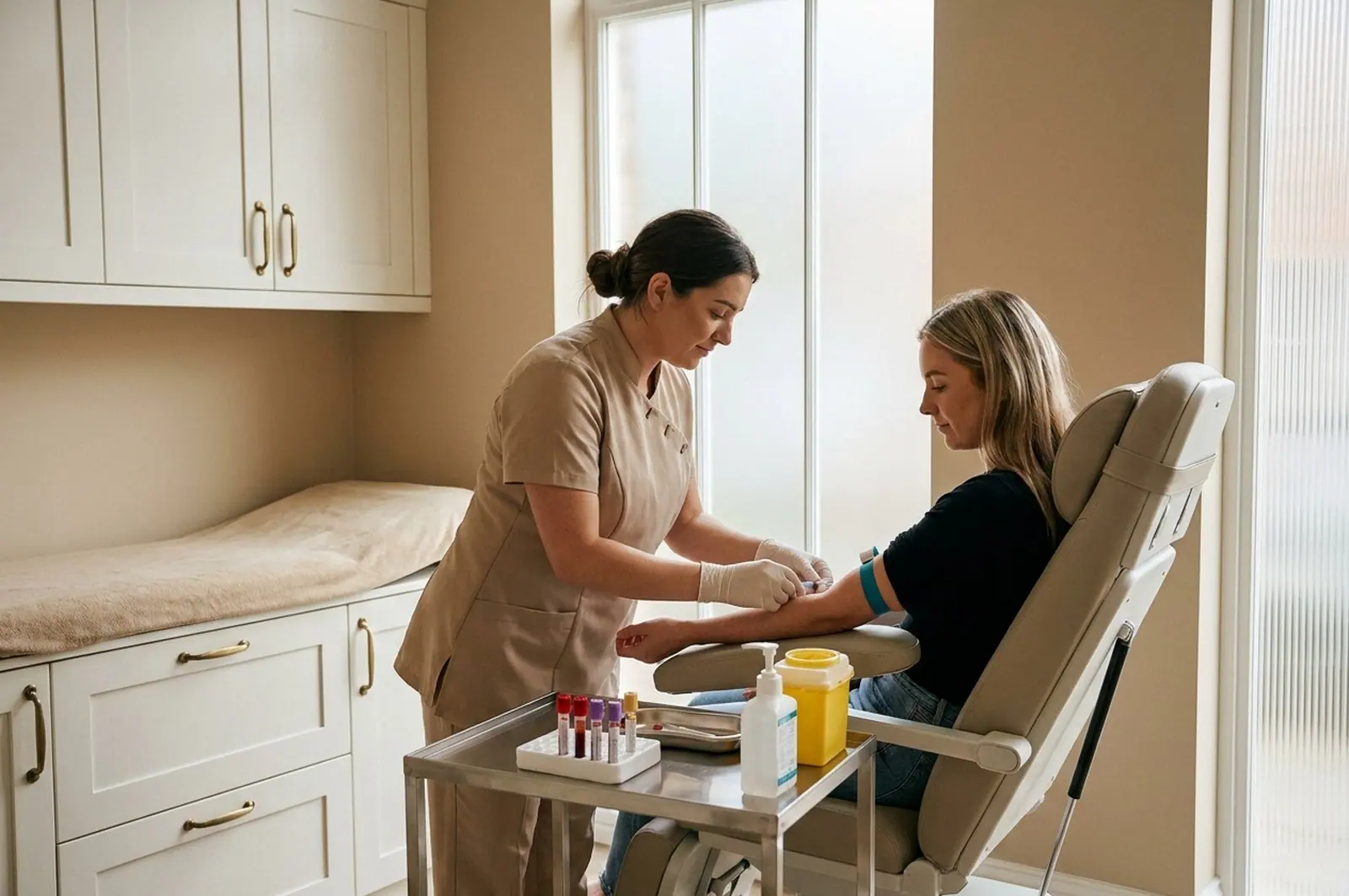
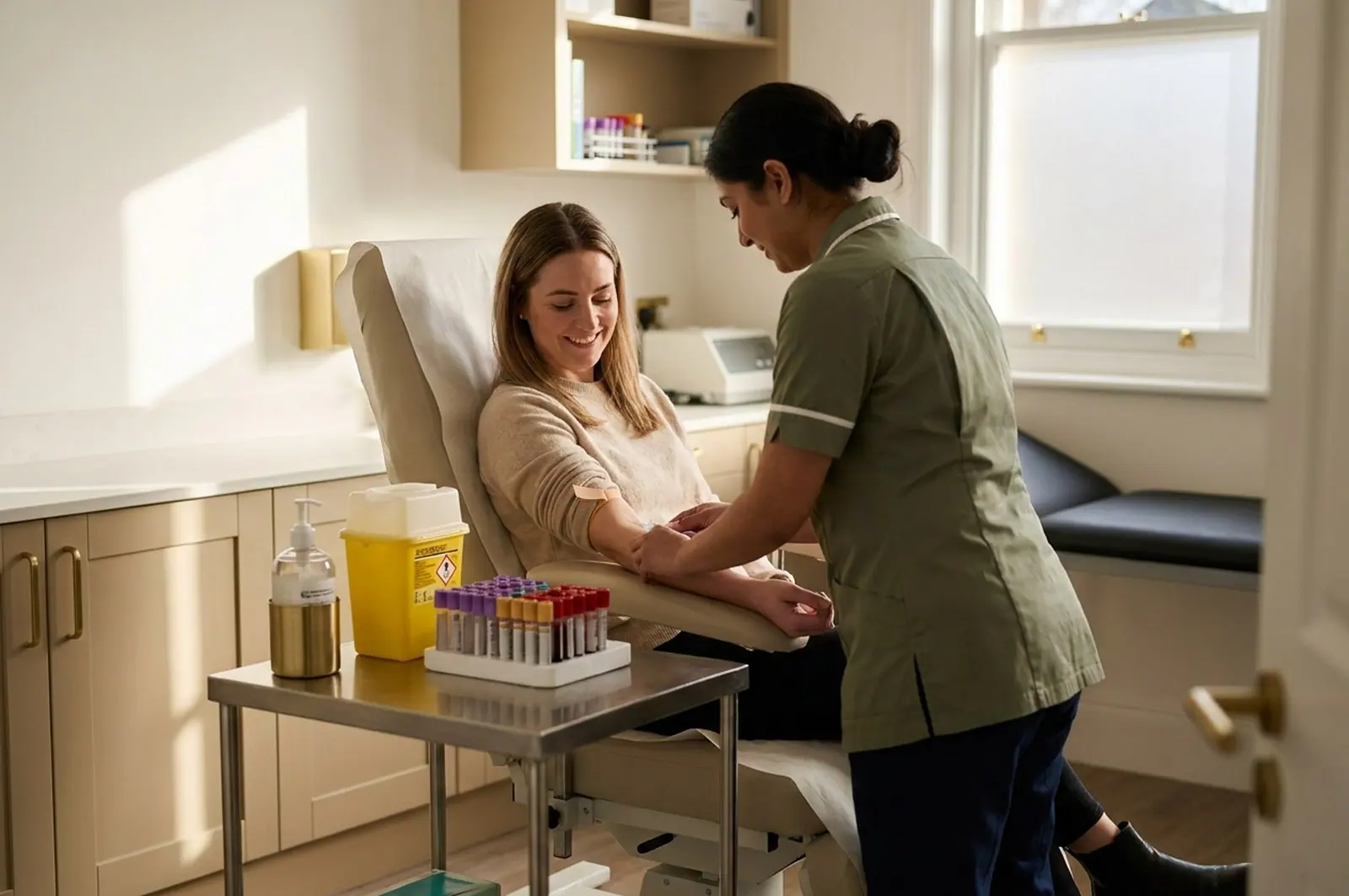
A quick venous blood draw, taken by a clinician.
- 4
Your results are sent to you securely, with clear guidance on any recommended next steps.
How to prepare for your test
- You do not need a GP referral. You can book this test directly online.
- Whether you need to fast depends on the panel. We confirm exactly what to do when your booking is confirmed, and you can call the clinic if you are unsure.
- When you book, tell us the first day of your last period and how regular your cycles are. Lab Tests Online UK says FSH is usually sampled at the start of a regular cycle (days 1 to 4), while the NHS says the timing of a progesterone test depends on how regular your periods are. These markers are timed differently, so one sample is a snapshot, and your results are read with your cycle day in mind.
- Tell the clinician about any medicines, including hormonal contraception, and any supplements, so your results are read in context.
- AMH needs no special preparation, according to Lab Tests Online UK. We confirm anything else when your booking is confirmed.
What your results can and cannot tell you
What they can show
- Your AMH, which gives context on ovarian reserve, meaning roughly how many eggs remain. It falls with age, and there is no single normal figure, so your report's own age-related range applies.
- Where FSH, LH and oestradiol sit against the laboratory's range. Lab Tests Online UK describes FSH and LH as used with oestradiol and progesterone in the investigation of infertility, and notes that ovulation occurs shortly after a mid-cycle surge of FSH and LH.
- Progesterone, which the NHS says can be tested to check whether you are ovulating, with the timing depending on how regular your periods are.
- Prolactin, TSH and free T4, which can help explain irregular cycles.
- A dated snapshot to share with your GP or a fertility clinic.
What they cannot show
- Whether you will or will not conceive. The Progress Educational Trust notes that an AMH result does not give insight into the quality of eggs and is not predictive of natural fertility, and that age is the strongest single predictor.
- The causes that need scans or other tests. The NHS lists an ultrasound, tests for blocked fallopian tubes and a chlamydia test among the checks used to look for the cause of infertility in women. A blood panel does not replace them.
- Anything about your partner. The NHS says fertility problems can affect either or both partners, and a semen analysis is part of assessing the male side.
- A diagnosis. A result outside the range is a prompt for a conversation with your GP, who decides on any further checks.
When you get your results, and what happens next
Most results are back within 1–3 working days depending on the panel. They are checked by a clinician and sent to you securely, with clear guidance on what to do next, including onward referral where appropriate. If you would like to talk them through, you can add a 30-minute clinician review for £30.
Your results are checked by a clinician and sent to you securely. If a value is outside the reference range, we say so plainly, explain what it may mean and suggest a sensible next step. That is usually a conversation with your GP, who can do an initial assessment and refer you to a specialist fertility team if needed. Bring the report with you.
The NHS notes that female fertility decreases with age and that fertility tests can take time, so an early appointment makes sense, and that it helps for both partners to see the GP. If you go on to consider a fertility clinic, the NHS advises choosing one licensed by the Human Fertilisation and Embryology Authority (HFEA). You can add a 30-minute clinician review of this report for £30.
Price and booking
The Essential Women's Fertility Test is £110, paid securely online when you book. Appointments are at 57 Rodney Street, Liverpool, Monday to Friday. You can book online, see all test prices, or read how a visit works.
Frequently asked questions
This page is for general information. Blood tests are carried out following a short clinical check to confirm the panel is appropriate for you. Your results are sent to you securely, with clear guidance on any recommended next steps.