Women's health
PCOS blood test in Liverpool
Useful markers where PCOS or androgen symptoms are suspected.
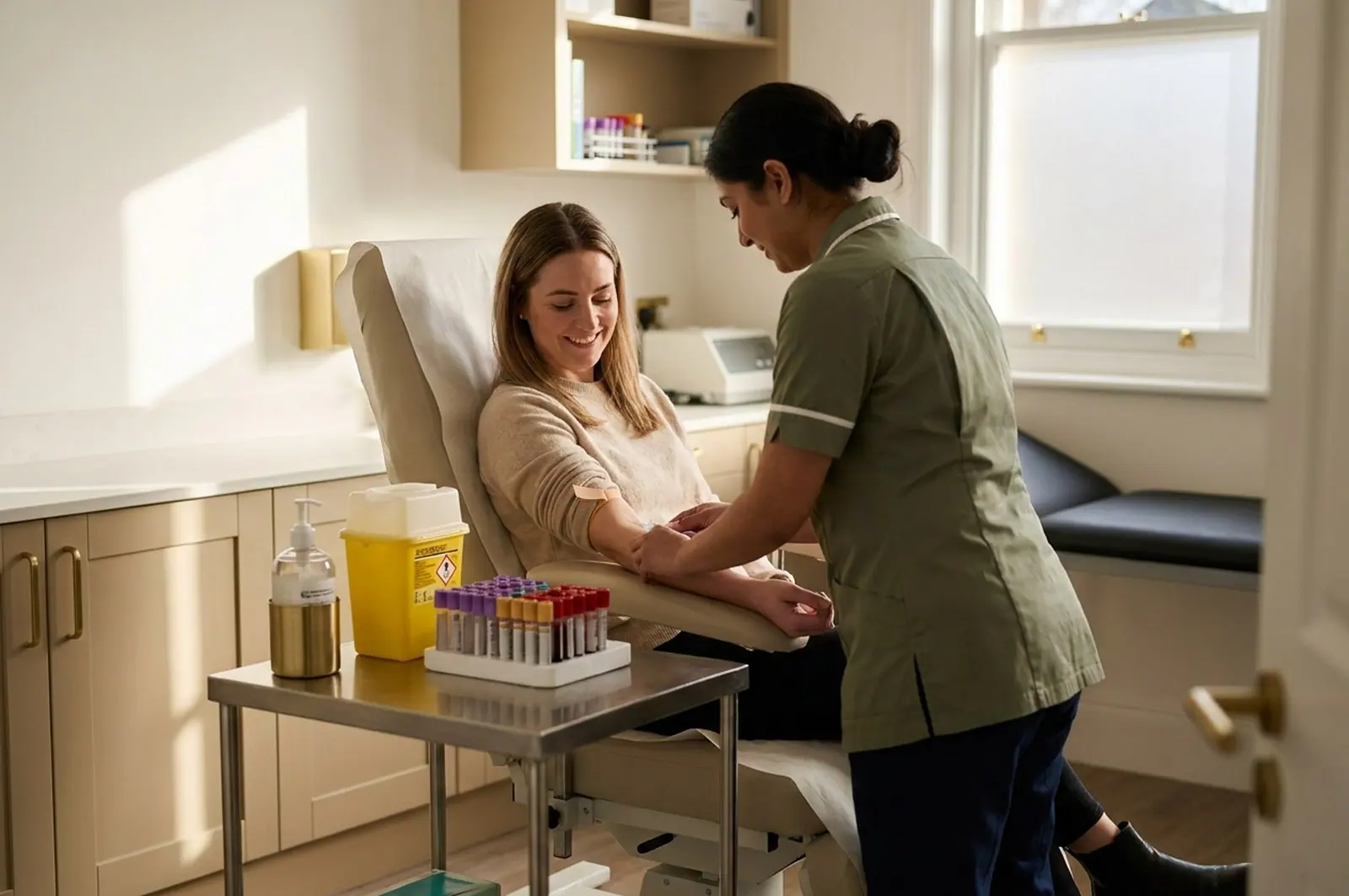
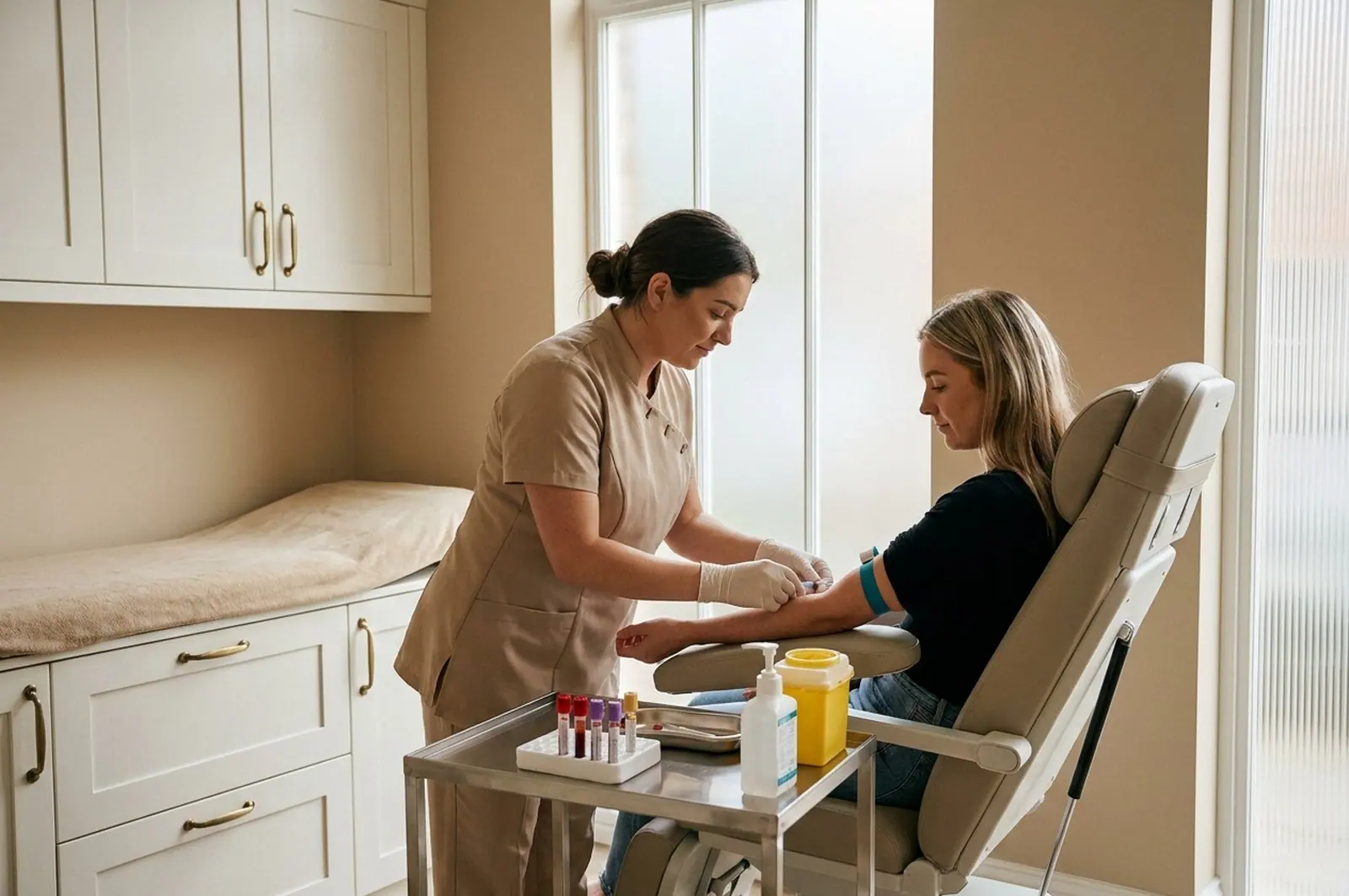
The PCOS / Androgen Symptoms Screen is a PCOS blood test in Liverpool for people with irregular periods, acne, extra hair growth or scalp hair thinning. One venous sample, taken by a clinician at 57 Rodney Street, is tested for 15 markers: testosterone, SHBG and the free androgen index, the reproductive hormones LH, FSH, oestradiol and prolactin, thyroid function, HbA1c and a cholesterol profile.
A blood test cannot give a PCOS diagnosis on its own, and this screen does not claim to. It looks at the hormone, androgen and metabolic markers that your GP or a specialist would want to see, so you arrive at an appointment with numbers. The NHS now calls the condition polyendocrine metabolic ovarian syndrome (PMOS) and says it used to be called PCOS. We use PCOS here because it is the name most people still search for.
What's tested
15 biomarkers from a single venous sample.
| Marker | What it tells you |
|---|---|
| Total Cholesterol/HDL Cholesterol Ratio | Total cholesterol divided by HDL. A lower ratio generally points to a more favourable balance. |
| Total Cholesterol | All the cholesterol carried in your blood, and a starting point for heart-health risk. |
| LDL Cholesterol | The cholesterol that can build up in artery walls over time. Lower is generally more favourable. |
| HDL Cholesterol | Cholesterol being carried away from your arteries. Higher is generally more favourable. |
| Triglycerides | A blood fat linked to diet, alcohol, weight and blood sugar control. |
| HbA1c | Your average blood sugar over roughly the last two to three months. |
| Thyroid Stimulating Hormone (TSH) | The signal from your pituitary gland that tells your thyroid how hard to work. It is the usual first thyroid check. |
| Free Thyroxine (FT4) | Free thyroxine, the main thyroid hormone available to your body's tissues. |
| Oestradiol | The main form of oestrogen. It follows your cycle and changes through the menopause. |
| Follicle Stimulating Hormone (FSH) | A pituitary hormone that drives egg development. It rises as the ovaries slow down, including around the menopause. |
| Luteinising Hormone (LH) | A pituitary hormone that triggers ovulation, read alongside FSH and oestradiol. |
| Prolactin | A pituitary hormone that supports milk production. A raised level can affect periods, fertility and libido. |
| Testosterone | The main male sex hormone, also present in smaller amounts in women. It influences energy, mood, libido and muscle. |
| Sex Hormone Binding Globulin (SHBG) | A protein that binds sex hormones, which affects how much testosterone and oestrogen is available. |
| Free Androgen Index | Testosterone divided by SHBG, an estimate of how much active testosterone you have. It is often used when assessing PCOS. |
Understand what's measured
Plain-English guides to the markers in this panel: what each one checks, and what high and low results can mean.
- Cholesterol blood test
- HbA1c blood test
- TSH blood test
- Oestradiol blood test
- Prolactin blood test
- Testosterone blood test
Read more
Who this blood test may suit
Your periods are irregular or far apart
Irregular periods or long gaps between periods are the first symptom the NHS lists for PMOS. They also have other causes, including thyroid conditions, so this panel checks thyroid function and prolactin as well as the reproductive hormones.
You have acne, extra hair growth or hair thinning
The NHS lists oily skin and acne, excessive hair growth (hirsutism) and hair loss among the main symptoms of PMOS. Lab Tests Online UK notes that even slight increases in testosterone production can contribute to acne and hirsutism. Testosterone and SHBG show where you sit.
You suspect PCOS and want numbers before seeing your GP
The NHS says to see a GP if you think you might have PMOS, and that a GP may arrange tests with a hormone or reproduction specialist. A private panel can give that first conversation something concrete to work from. It does not replace it.
You have been told you may have PCOS and want a wider check
The NHS says PMOS can sometimes raise the risk of type 2 diabetes and cardiovascular disease, and that regular check-ups can help. HbA1c and cholesterol are included for that reason.
Fertility is part of the question
Difficulty getting pregnant is also on the NHS list of PMOS symptoms. If fertility is your main reason for testing, the Essential Women's Fertility Test adds AMH and progesterone.
What happens at your appointment
- 1
Arrive at 57 Rodney Street for your appointment. No GP referral needed.
- 2
Your clinician confirms the right test for you and answers any questions.
- 3
A quick venous blood draw, taken by a clinician.
- 4
Your results are sent to you securely, with clear guidance on any recommended next steps.
How to prepare for your test
- You do not need a GP referral. You can book this test directly online.
- Whether you need to fast depends on the panel. We confirm exactly what to do when your booking is confirmed, and you can call the clinic if you are unsure.
- Tell us the first day of your last period and how regular your cycles are when you book, or say if periods are absent. Lab Tests Online UK notes that LH and FSH are often sampled in the early days of a cycle, so cycle details help your results to be read in context.
- Mention any medicines, including hormonal contraception, and any supplements, so your results are read in context.
- No special preparation is needed for most of the markers. We confirm exactly what to do when your booking is confirmed.
What your results can and cannot tell you
What they can show
- Your testosterone, SHBG and free androgen index against the laboratory's reference range. The free androgen index is calculated by dividing total testosterone by SHBG.
- Where LH, FSH, oestradiol and prolactin sit, which gives context on your cycle and on other hormonal reasons for irregular periods.
- Thyroid function (TSH and free T4). The NHS lists irregular or heavy periods among the symptoms of an underactive thyroid, so it is a sensible thing to rule in or out.
- HbA1c, which Diabetes UK describes as your average blood sugar over the last two to three months, and a cholesterol profile: total cholesterol, LDL, HDL, triglycerides and the total-to-HDL ratio.
- A baseline you can repeat and share with your GP or a specialist.
What they cannot show
- A diagnosis. The NHS lists blood tests and, for people over 18, an ultrasound scan of the ovaries among the tests for PMOS, usually arranged through a GP. A blood panel cannot replace the scan, and a GP or specialist makes any diagnosis.
- Insulin resistance directly. The NHS lists blood tests for insulin resistance among the tests for PMOS, but this screen includes HbA1c rather than fasting insulin. The Ultimate Specialist Diabetes Test includes fasting insulin and C-peptide.
- AMH, which is not part of this screen.
- Anything that explains the cause on its own. The NHS says the cause of PMOS is unknown. The free androgen index is also an extra calculation: Lab Tests Online UK notes that it does not usually give more information than testosterone alone.
When you get your results, and what happens next
Most results are back within 1–3 working days depending on the panel. They are checked by a clinician and sent to you securely, with clear guidance on what to do next, including onward referral where appropriate. If you would like to talk them through, you can add a 30-minute clinician review for £30.
Your results are checked by a clinician and sent to you securely. If a value falls outside the reference range, we say so plainly, explain what it may mean and suggest a sensible next step. That is usually a conversation with your GP, who can look at your symptoms and results together and arrange an ultrasound or a specialist referral if needed. Bring the report with you.
The NHS notes that symptoms of PMOS can be mild or severe, or absent, and that they can be common to many conditions, so having them does not mean you have it. If you would like to talk through your report first, you can add a 30-minute clinician review for £30. Decisions about care are for your GP or specialist.
Price and booking
The PCOS / Androgen Symptoms Screen is £90, paid securely online when you book. Appointments are at 57 Rodney Street, Liverpool, Monday to Friday. You can book online, see all test prices, or read how a visit works.
Frequently asked questions
This page is for general information. Blood tests are carried out following a short clinical check to confirm the panel is appropriate for you. Your results are sent to you securely, with clear guidance on any recommended next steps.