Men's health
Men's health blood test in Liverpool
The most complete picture of men's health we offer.
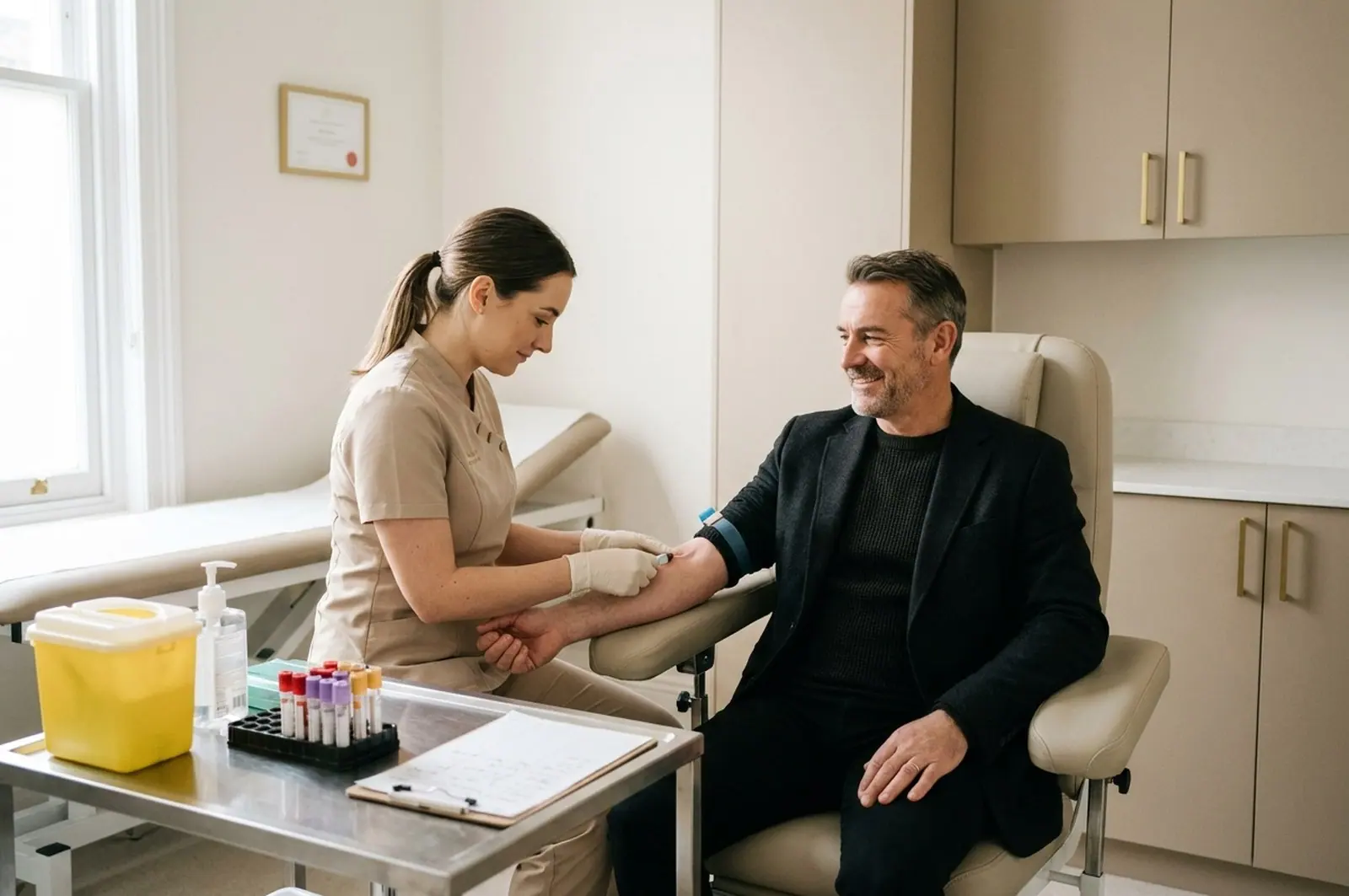
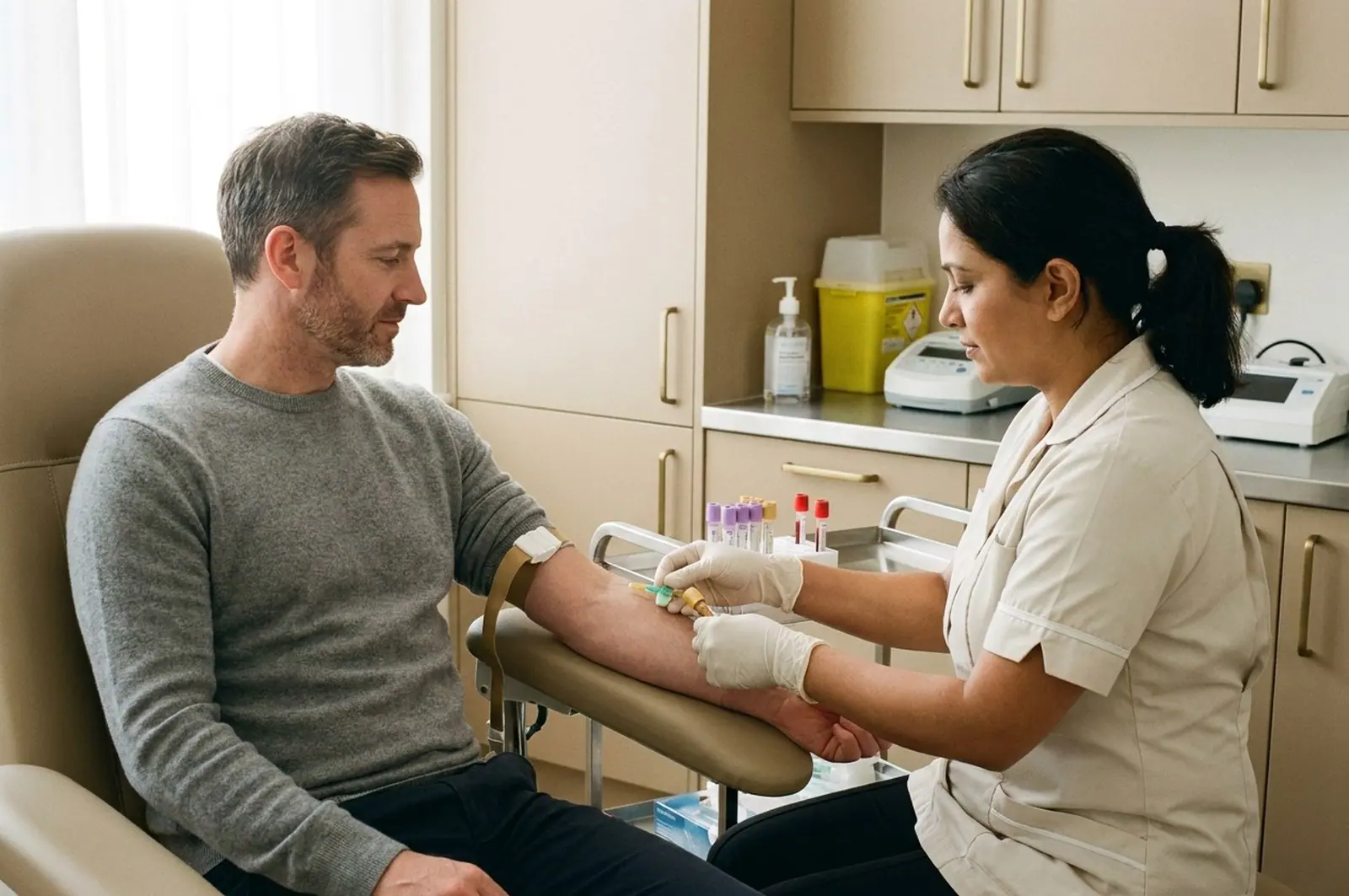
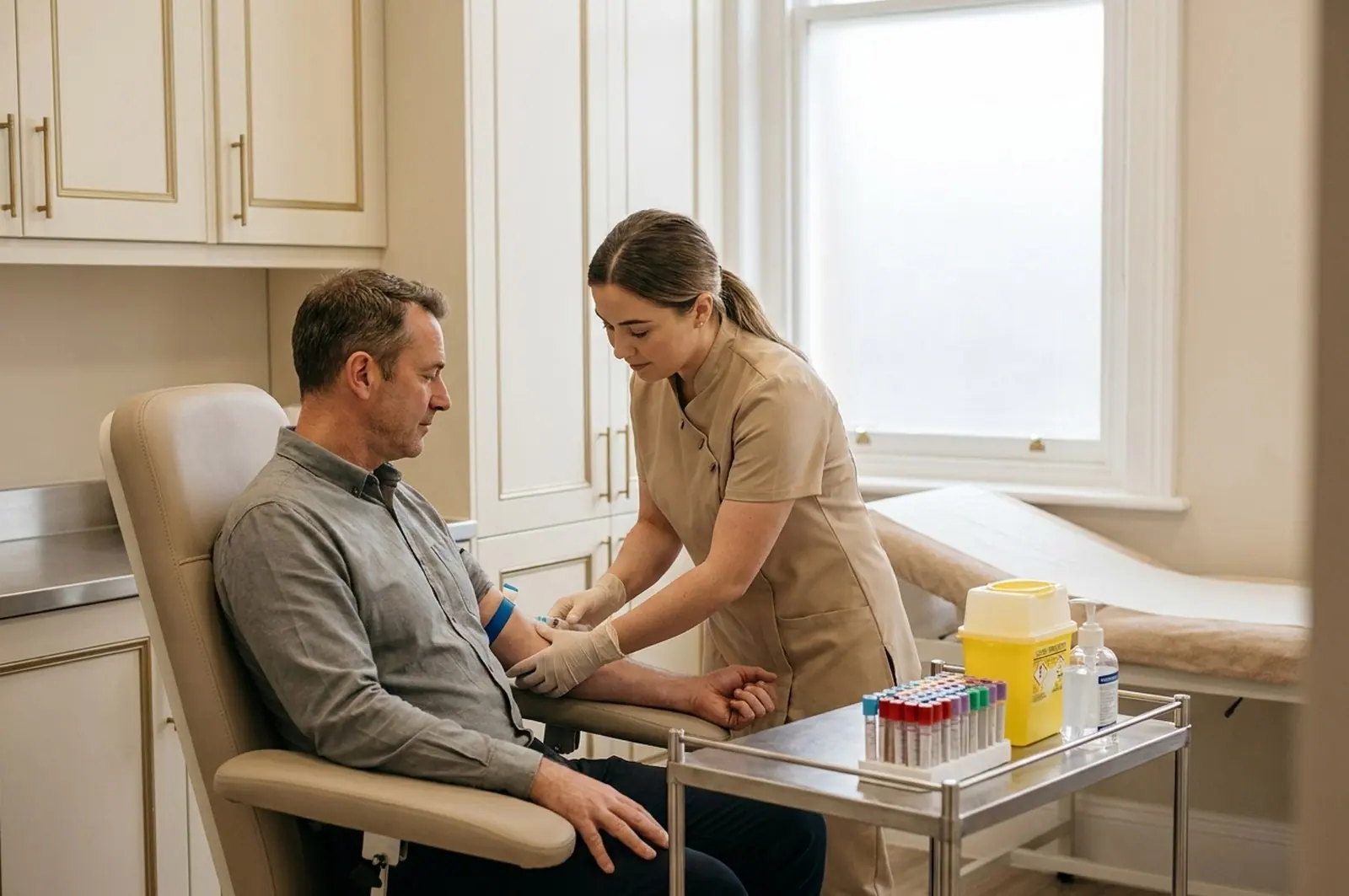
The Ultimate Men's Health & Wellness Test is a men's health blood test in Liverpool that looks at hormones, prostate, thyroid, iron, vitamins, cholesterol, blood sugar, liver and kidney in a single visit. One venous sample, taken by a clinician at 57 Rodney Street, is tested for 41 markers, including testosterone, free testosterone, SHBG, LH, FSH, oestradiol, prolactin, DHEA-S and a prostate profile.
It is our widest men's panel. It suits men who want one thorough review rather than several smaller checks, or who have a mix of symptoms such as tiredness, low mood or low sex drive and want to look across the common, checkable causes at once. It is not needed by everyone, and a more focused panel is often a sensible first step.
What's tested
41 biomarkers from a single venous sample.
| Marker | What it tells you |
|---|---|
| Transferrin Saturation | The share of that carrier protein currently loaded with iron. |
| Total Cholesterol/HDL Cholesterol Ratio | Total cholesterol divided by HDL. A lower ratio generally points to a more favourable balance. |
| Full Blood Count | Counts your red cells, white cells and platelets and measures haemoglobin. It gives a broad picture of anaemia, infection and clotting cells. |
| Iron | The iron circulating in your blood right now. It shifts through the day and after meals, so it is read alongside ferritin. |
| Ferritin | Your body's iron store, and usually the first marker to fall when iron runs low. |
| Total Iron Binding Capacity (TIBC) | How much iron your blood is able to carry. It tends to rise when iron stores are low. |
| Transferrin | The protein that carries iron around your body. |
| Total Cholesterol | All the cholesterol carried in your blood, and a starting point for heart-health risk. |
| LDL Cholesterol | The cholesterol that can build up in artery walls over time. Lower is generally more favourable. |
| HDL Cholesterol | Cholesterol being carried away from your arteries. Higher is generally more favourable. |
| Triglycerides | A blood fat linked to diet, alcohol, weight and blood sugar control. |
| High Sensitivity C-Reactive Protein (hsCRP) | A more sensitive CRP test that picks up low-grade inflammation, used when looking at heart risk. |
| HbA1c | Your average blood sugar over roughly the last two to three months. |
| Creatinine | A waste product from muscle that your kidneys filter out. It is used to judge kidney function. |
| Adjusted Calcium | Calcium in your blood, corrected for albumin. It matters for bones, nerves and muscles. |
| Chloride | An electrolyte that works with sodium to balance fluids in the body. |
| Magnesium | A mineral involved in muscle, nerve and energy function. |
| Phosphate | A mineral that works with calcium for bone health and for how cells function. |
| Potassium | An electrolyte that matters for nerves, muscles and the heart. |
| Sodium | The main electrolyte that controls your body's fluid balance. |
| Urea | A waste product from protein breakdown that your kidneys clear. |
| Alanine Aminotransferase (ALT) | A liver enzyme that rises when liver cells are irritated or damaged. |
| Alkaline Phosphatase (ALP) | An enzyme found in the liver and bones, used to check both. |
| Aspartate Aminotransferase (AST) | An enzyme found in the liver and muscle, read alongside ALT. |
| Gamma-Glutamyltransferase (GGT) | A liver and bile-duct enzyme that is sensitive to alcohol and some medicines. |
| Total Bilirubin | A yellow pigment made when red cells break down, which the liver processes. |
| Albumin | The main protein made by your liver. It reflects nutrition and liver and kidney health. |
| Folic Acid | Folate, a B vitamin your body needs to make red blood cells and DNA. |
| Vitamin B12 | A vitamin needed for nerves and red blood cells. A low level can cause tiredness. |
| Vitamin D | Supports bones and muscles. Sunlight is the main source, so levels tend to dip in winter. |
| Thyroid Stimulating Hormone (TSH) | The signal from your pituitary gland that tells your thyroid how hard to work. It is the usual first thyroid check. |
| Free Thyroxine (FT4) | Free thyroxine, the main thyroid hormone available to your body's tissues. |
| Oestradiol | The main form of oestrogen. It follows your cycle and changes through the menopause. |
| Follicle Stimulating Hormone (FSH) | A pituitary hormone that drives egg development. It rises as the ovaries slow down, including around the menopause. |
| Luteinising Hormone (LH) | A pituitary hormone that triggers ovulation, read alongside FSH and oestradiol. |
| Prolactin | A pituitary hormone that supports milk production. A raised level can affect periods, fertility and libido. |
| Testosterone | The main male sex hormone, also present in smaller amounts in women. It influences energy, mood, libido and muscle. |
| Sex Hormone Binding Globulin (SHBG) | A protein that binds sex hormones, which affects how much testosterone and oestrogen is available. |
| Free Testosterone | The part of your testosterone that is not bound to proteins and is available to your tissues. |
| Prostate Profile | A check of prostate-related blood markers, including PSA (prostate-specific antigen). A raised PSA has several possible causes and is one piece of information, not a diagnosis. |
| Dehydroepiandrosterone Sulphate (DHEAs) | A hormone made by the adrenal glands that your body uses as a building block for sex hormones. |
Understand what's measured
Plain-English guides to the markers in this panel: what each one checks, and what high and low results can mean.
- Transferrin saturation blood test
- Cholesterol blood test
- Iron blood test
- Ferritin blood test
- TIBC blood test
- CRP blood test
- HbA1c blood test
- Creatinine & eGFR blood test
Read more
Who this blood test may suit
You have several symptoms and are not sure where to start
The NHS lists tiredness, mood swings and low sex drive among the symptoms men sometimes report in midlife, and says lifestyle and psychological factors are often responsible. This panel looks across hormones, thyroid, iron, B12, vitamin D and blood sugar together, so more of the common causes are checked in one go.
You want a thorough yearly review
One appointment covers blood count, cholesterol, HbA1c, kidney, liver and bone minerals as well as hormones. Repeating the same panel later is a like-for-like comparison, because the sample, laboratory and markers stay the same.
You are over 50, or prostate health runs in your family
The panel includes a prostate profile, which includes PSA. The NHS does not currently offer routine PSA testing, and it advises talking through the benefits and risks with a GP before deciding. A private test is one way to get a baseline, and we suggest talking it through with a doctor first if you are unsure.
Heart disease or diabetes runs in your family
The NHS notes that high cholesterol can only be found with a blood test. The panel gives a full cholesterol profile and HbA1c, which Diabetes UK describes as your average blood glucose over the last two to three months.
What happens at your appointment
- 1
Arrive at 57 Rodney Street for your appointment. No GP referral needed.
- 2
Your clinician confirms the right test for you and answers any questions.
- 3
A quick venous blood draw, taken by a clinician.
- 4
Your results are sent to you securely, with clear guidance on any recommended next steps.
How to prepare for your test
- You do not need a GP referral. You can book this test directly online.
- Whether you need to fast depends on the panel. We confirm exactly what to do when your booking is confirmed, and you can call the clinic if you are unsure.
- Book a morning appointment if you can. Lab Tests Online UK notes that testosterone levels are highest in the morning, so a morning sample is easier to compare with later ones.
- For the two days before the test, the NHS advises against ejaculating, cycling and exercise that leaves you out of breath, as these can raise PSA. If you have had a urine infection, the NHS says to wait 4 to 6 weeks after it has cleared.
- Mention any medicines or supplements you take, including anything that affects hormone levels. They can change results and your clinician will want to know.
What your results can and cannot tell you
What they can show
- Your hormone balance: total and free testosterone, SHBG, LH, FSH, oestradiol, prolactin and DHEA-S. Lab Tests Online UK explains that SHBG carries testosterone, so a result outside the normal range can make total testosterone misleading on its own.
- A prostate profile, including PSA. A raised PSA has several possible causes, including an enlarged prostate, and is one piece of information rather than a diagnosis.
- Your thyroid function through TSH and free T4, and your levels of vitamin B12, folate and vitamin D.
- Your blood count and iron picture, through haemoglobin, ferritin, iron, TIBC, transferrin and transferrin saturation.
- Your cholesterol profile, HbA1c and hsCRP (a marker of inflammation), plus liver, kidney and bone-mineral markers such as calcium, phosphate and magnesium.
What they cannot show
- A diagnosis. The NHS says a diagnosis of low testosterone is made from symptoms together with blood tests, and your GP or a specialist is the right person to make it.
- Whether a single result is typical for you. Testosterone is highest in the morning and falls through the day, and a low result is usually checked again on another morning before conclusions are drawn.
- Anything outside the 41 markers listed. Creatine kinase, cortisol, free T3, thyroid antibodies, eGFR and uric acid are not included.
- Blood pressure, weight, heart rhythm, urinary symptoms or a physical examination. A PSA result also cannot rule prostate cancer in or out on its own.
When you get your results, and what happens next
Most results are back within 1–3 working days depending on the panel. They are checked by a clinician and sent to you securely, with clear guidance on what to do next, including onward referral where appropriate. If you would like to talk them through, you can add a 30-minute clinician review for £30.
If a result falls outside the reference range, your clinician will say so plainly and explain what it may mean, then suggest a sensible next step. A low testosterone result is usually repeated on a second morning, and read alongside your symptoms, SHBG, LH and prolactin. Your GP can arrange further assessment, and we do not prescribe or supply treatment.
A raised PSA is usually repeated before anything else is decided. If it stays high, the NHS says a GP may discuss referral to a specialist for further tests. A 30-minute clinician review (£30) can be added if you want to go through a long report in detail.
Price and booking
The Ultimate Men's Health & Wellness Test is £205, paid securely online when you book. Appointments are at 57 Rodney Street, Liverpool, Monday to Friday. You can book online, see all test prices, or read how a visit works.
Frequently asked questions
This page is for general information. Blood tests are carried out following a short clinical check to confirm the panel is appropriate for you. Your results are sent to you securely, with clear guidance on any recommended next steps.