Everyday health
Diabetes blood test in Liverpool
The complete picture of blood sugar control and insulin resistance.

The Ultimate Specialist Diabetes Test is a diabetes blood test in Liverpool built around HbA1c, the measure of your average blood sugar over the last two to three months. One venous sample, taken by a clinician at 57 Rodney Street, is also tested for fasting glucose, fasting insulin and C-peptide, so blood sugar control and insulin can be read side by side. In all it covers 26 markers, including kidney, liver and cholesterol markers.
No GP referral is needed. It suits people who have prediabetes or a raised result, a family history of type 2 diabetes, or an existing diagnosis they want to keep an eye on between NHS reviews. A blood test shows where your numbers sit. It does not give a diagnosis: your GP or diabetes team does that, and decides on any care that follows.
What's tested
26 biomarkers from a single venous sample.
| Marker | What it tells you |
|---|---|
| HbA1c | Your average blood sugar over roughly the last two to three months. |
| Fasting Glucose | Your blood sugar after going without food overnight. |
| Fasting Insulin | The insulin your body releases at rest. A high level can suggest your body is working harder to control blood sugar. |
| C-Peptide | A by-product made when your body produces insulin, so it shows how much insulin you are making. |
| HOMA-IR (Insulin Resistance) | A calculation from fasting glucose and insulin that estimates how well your body responds to insulin. |
| Total Cholesterol | All the cholesterol carried in your blood, and a starting point for heart-health risk. |
| HDL Cholesterol | Cholesterol being carried away from your arteries. Higher is generally more favourable. |
| LDL Cholesterol | The cholesterol that can build up in artery walls over time. Lower is generally more favourable. |
| Triglycerides | A blood fat linked to diet, alcohol, weight and blood sugar control. |
| Total Cholesterol/HDL Cholesterol Ratio | Total cholesterol divided by HDL. A lower ratio generally points to a more favourable balance. |
| Creatinine | A waste product from muscle that your kidneys filter out. It is used to judge kidney function. |
| Estimated Glomerular Filtration Rate (eGFR) | An estimate of how well your kidneys filter blood, calculated from creatinine, age and sex. |
| Urea | A waste product from protein breakdown that your kidneys clear. |
| Sodium | The main electrolyte that controls your body's fluid balance. |
| Potassium | An electrolyte that matters for nerves, muscles and the heart. |
| Chloride | An electrolyte that works with sodium to balance fluids in the body. |
| Uric Acid | A waste product that can build up and form crystals in the joints, as in gout. |
| Alanine Aminotransferase (ALT) | A liver enzyme that rises when liver cells are irritated or damaged. |
| Aspartate Aminotransferase (AST) | An enzyme found in the liver and muscle, read alongside ALT. |
| Alkaline Phosphatase (ALP) | An enzyme found in the liver and bones, used to check both. |
| Gamma-Glutamyltransferase (GGT) | A liver and bile-duct enzyme that is sensitive to alcohol and some medicines. |
| Total Bilirubin | A yellow pigment made when red cells break down, which the liver processes. |
| Albumin | The main protein made by your liver. It reflects nutrition and liver and kidney health. |
| Globulin | A group of proteins that includes antibodies, giving context on immune and liver activity. |
| Total Protein | The total of the main proteins in your blood, albumin and the globulins. |
| C-Reactive Protein (CRP) | A marker of inflammation somewhere in the body. |
Understand what's measured
Plain-English guides to the markers in this panel: what each one checks, and what high and low results can mean.
- HbA1c blood test
- Fasting insulin blood test
- Cholesterol blood test
- Creatinine & eGFR blood test
- Urea blood test
- Potassium blood test
- ALP blood test
- GGT blood test
Read more
Who this blood test may suit
You have prediabetes or a raised blood sugar result
Prediabetes means blood sugar is higher than normal but not high enough for a diabetes diagnosis, and the NHS says people with it are at greater risk of type 2 diabetes. HbA1c shows where you sit now, and a repeat later shows which way things are going.
Type 2 diabetes runs in your family
The NHS lists a parent, brother or sister with type 2 diabetes among the things that raise your risk, along with age, ethnic background, being overweight and not very physically active, and high blood pressure. Not everyone with type 2 diabetes has symptoms, so checking is the only way to know.
You have a diagnosis and want an extra check
Your diabetes team sets what is monitored and when, and this test does not replace those reviews. Some people like an additional snapshot between appointments, with the report to share with their team.
You want to understand insulin as well as blood sugar
Fasting insulin and C-peptide give context on how much insulin your body is producing. They are extra information for your GP, rather than part of a standard first-line check.
You want blood sugar, kidney and cholesterol looked at together
The NHS says that people with type 2 diabetes have cholesterol, blood pressure and kidneys checked at least once a year, and HbA1c every 3 to 6 months. This panel covers the blood-test side of those areas in a single visit.
What happens at your appointment
- 1
Arrive at 57 Rodney Street for your appointment. No GP referral needed.
- 2
Your clinician confirms the right test for you and answers any questions.
- 3
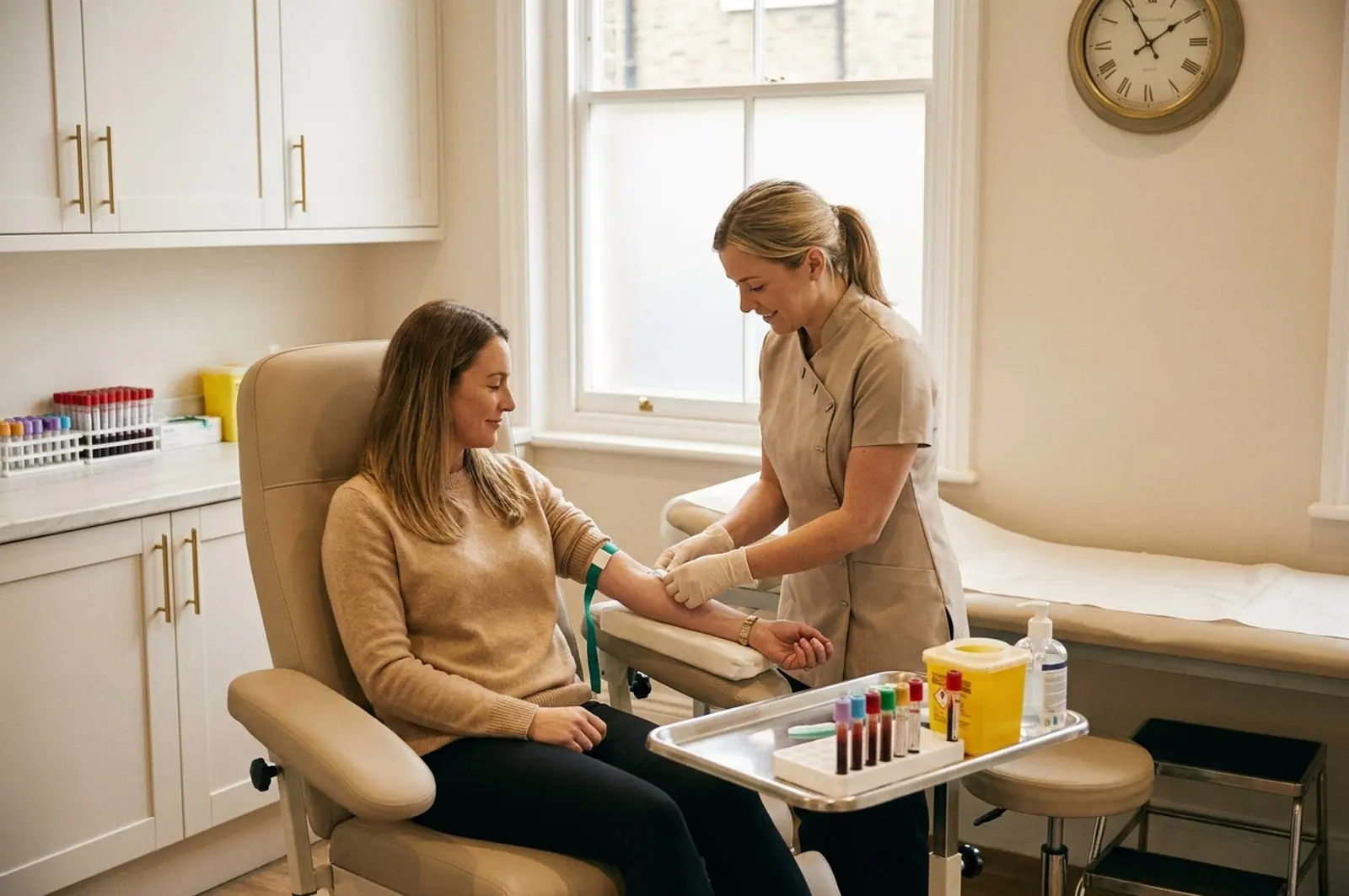
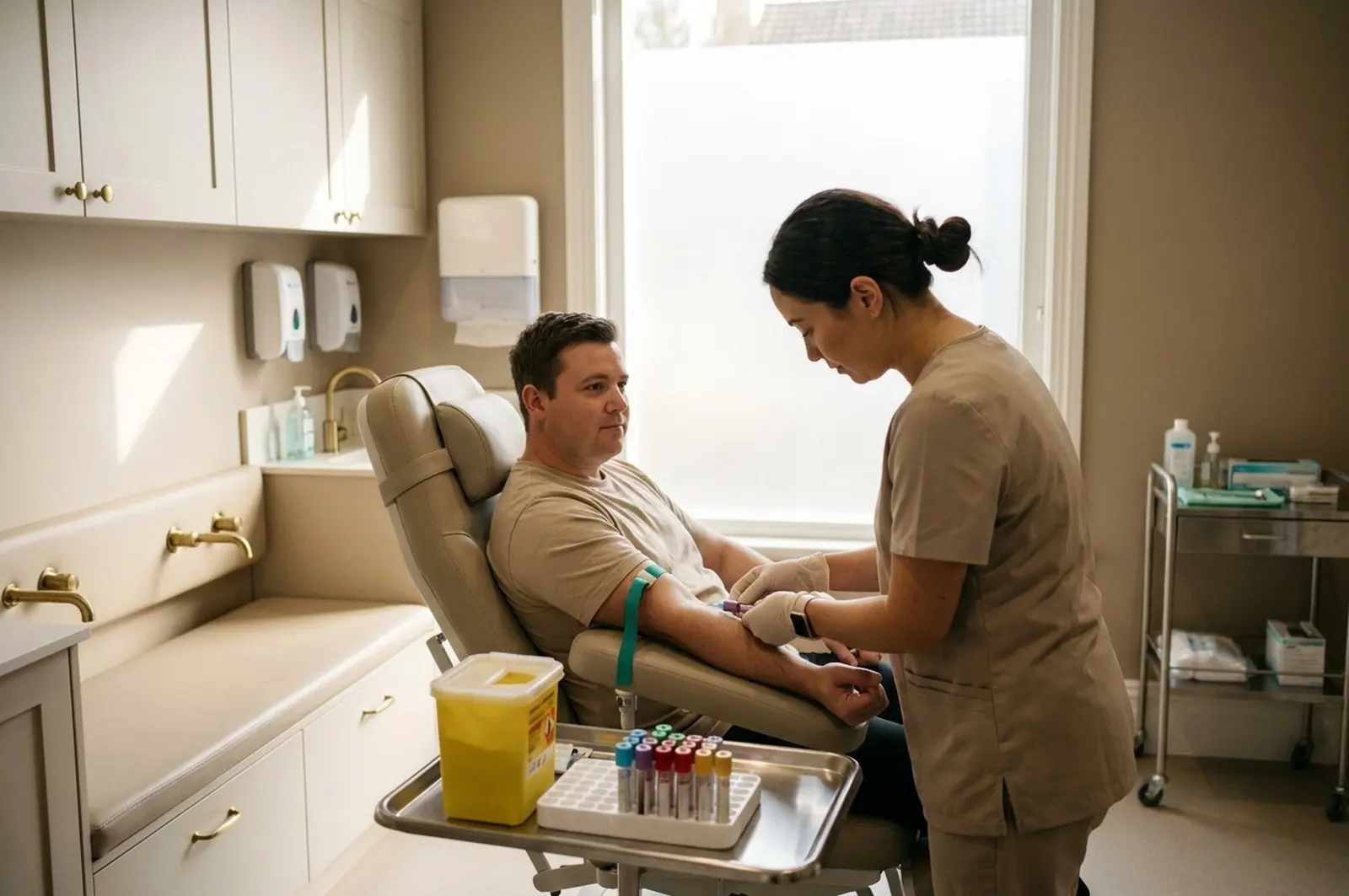
A quick venous blood draw, taken by a clinician.
- 4
Your results are sent to you securely, with clear guidance on any recommended next steps.
How to prepare for your test
- You do not need a GP referral. You can book this test directly online.
- Whether you need to fast depends on the panel. We confirm exactly what to do when your booking is confirmed, and you can call the clinic if you are unsure.
- This panel includes fasting glucose and fasting insulin, so expect to be asked to fast. The NHS describes fasting as not eating or drinking anything other than water, and Lab Tests Online UK says fasting for at least 8 hours is generally recommended before a glucose test. We confirm exactly what to do when your booking is confirmed.
- Tell the clinician about any medicines and supplements. Diabetes UK notes that HbA1c can change for lots of reasons, including being unwell and taking some medicines, such as steroids.
- If you already have a diabetes diagnosis, carry on with your usual medicines unless your own team has told you otherwise, and ask them if you are unsure about fasting.
What your results can and cannot tell you
What they can show
- Your HbA1c, which Diabetes UK describes as your average blood sugar over the last two to three months. Diabetes UK gives prediabetes as 42 to 47 mmol/mol and type 2 diabetes as 48 mmol/mol or above, with a normal level below 42.
- Your fasting glucose, a single reading of blood sugar after a fast, alongside HbA1c's longer-term view.
- Fasting insulin and C-peptide. Lab Tests Online UK explains that a C-peptide test helps show how much insulin your pancreas is producing, and that a raised insulin with a normal or moderately raised glucose may point to some insulin resistance.
- Creatinine, eGFR, urea and electrolytes (kidney function), a full cholesterol profile, liver markers (ALT, AST, ALP, GGT, bilirubin, albumin, globulin and total protein) and CRP, an inflammation marker.
- A baseline you can repeat in three to twelve months, with the same laboratory and markers, so the comparison is like for like.
What they cannot show
- A diagnosis. Diabetes is identified through blood tests, but a GP or diabetes team confirms it, and Lab Tests Online UK notes that someone without symptoms should have the test repeated to be certain.
- A reliable HbA1c in every situation. Diabetes UK says the result can be affected by conditions of the red blood cells, such as haemolytic anaemia, sickle cell anaemia and thalassaemia. Tell the clinician if you have one.
- Which type of diabetes you have. That needs your GP or specialist and, where relevant, other tests.
- A standard measure of insulin resistance. Lab Tests Online UK notes that most guidelines do not recommend measuring insulin routinely to assess it, so read the insulin and HOMA-IR figures as extra context, not a verdict.
When you get your results, and what happens next
Most results are back within 1–3 working days depending on the panel. They are checked by a clinician and sent to you securely, with clear guidance on what to do next, including onward referral where appropriate. If you would like to talk them through, you can add a 30-minute clinician review for £30.
Your results are checked by a clinician and sent to you securely. If a value is outside the reference range, we say so plainly, explain what it may mean and suggest a sensible next step. That is usually a conversation with your GP, who can repeat a test, arrange further checks and confirm or rule out a diagnosis. Bring the report with you.
The NHS says people with prediabetes may be eligible for the NHS Diabetes Prevention Programme, which your GP can tell you about. If you have symptoms of diabetes now, such as feeling thirsty all the time, peeing more than usual, feeling very tired or losing weight without trying, the NHS advises asking for an urgent GP appointment or calling NHS 111 rather than waiting for a private result.
Price and booking
The Ultimate Specialist Diabetes Test is £100, paid securely online when you book. Appointments are at 57 Rodney Street, Liverpool, Monday to Friday. You can book online, see all test prices, or read how a visit works.
Frequently asked questions
This page is for general information. Blood tests are carried out following a short clinical check to confirm the panel is appropriate for you. Your results are sent to you securely, with clear guidance on any recommended next steps.